At the heart of RUDI project are eight Rural Innovation Clusters: inclusive, participatory platforms where the people who shape a territory come together to tackle its demographic and climate challenges. Each cluster brings together municipalities, SMEs, social economy actors, civil society organisations and research institutions, reaching out deliberately to voices that are often underrepresented in regional planning: women, young people, older residents and migrants.
Rather than importing ready-made solutions, each cluster starts from its own territory.
In inception workshops and through participatory rural appraisal, cluster members map their region's characteristics, resources and challenges, and co-draft a shared charter defining their objectives, roles and decision-making.
From this foundation, each RIC develops a Territorial Roadmap and Action-Learning Agenda: a locally owned plan that guides the design of pilot solutions, refined through iterative cycles of learning and a training programme for local change facilitators.
Clusters exchange experiences across regions through monthly calls, thematic peer-learning sessions and cross-regional twinning, so that what works in one territory can inspire and inform others.
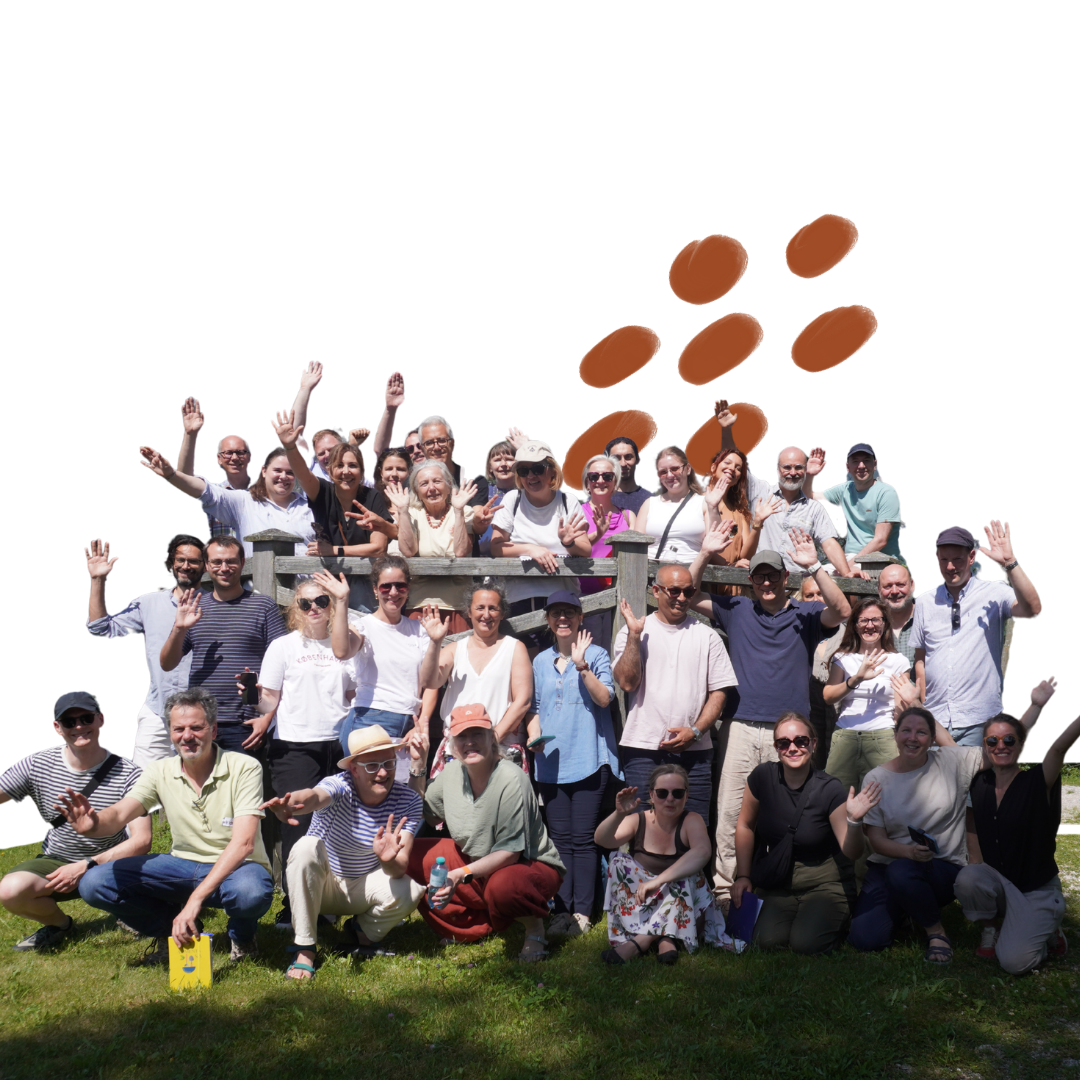
Each Rural Innovation Cluster hosts a Rural Living Lab (RLL), the place where cluster-level strategies become tangible innovation: testing solutions in domains such as cooperative care models, circular agri-food systems, climate-resilient mobility, sustainable water and energy management, inclusive housing and eco-tourism.
The eight RUDI Rural Innovation Clusters span a wide spectrum of Europe's rural realities:
Eisenwurzen-Kirchdorf/Steyr
(Austria)
Montemuro, Arada and Gralheira Mountains
(Portugal)
De Liemers
(Netherlands)
Kyffhäuserkreis
(Germany)
Małopolska
(Poland)
Province of Imperia
(Italy)
Apriltsi, Central Balkan area
(Bulgaria)
Kurzeme
(Latvia)
Some face rapid ageing, depopulation and labour shortages; others are grappling with droughts, floods, soil degradation and increasing climate pressure. What they share is the conviction that rural futures are not something that happens to a territory, but something its communities can design together.